Research Progress
Mangrove Micro-climates Safeguard Estuarine Fish Diversity Against Thermal Stress and Salinity Intrusion in the Irrawaddy Delta
Estuarine ecosystems in tropical deltas face severe climate-induced threats from rising water temperatures and accelerating saltwater intrusion. In Myanmar’s Irrawaddy Delta, extensive mangrove conversion to agricultural land has stripped away natural canopy shading, leaving aquatic communities highly exposed to extreme micro-climatic fluctuations. While static observational surveys have documented coastal biodiversity, predicting how fish assemblages survive under future warming and salinity scenarios has remained a critical ecological challenge.
In a study published online in Environmental Biology of Fishes, a research team led by Prof. Xiao Yong Chen from the Kunming Institute of Zoology (KIZ) of the Chinese Academy of Sciences, alongside collaborators from the Southeast Asia Biodiversity Research Institute (SEABRI), the Forest Department of Myanmar’s Ministry of Natural Resources and Environmental Conservation, and the University of Chinese Academy of Sciences, revealed that natural mangrove forests function as vital climate refugia that buffer estuarine fish diversity against severe thermal and salinity stress.
To systematically evaluate ecosystem resilience, the researchers conducted multi-seasonal field surveys across 24 stratified sampling sites in Bogale and Pyapon Townships and developed a trait-based scenario simulation model. Extracting species-specific thermal and salinity tolerance thresholds, the team simulated species persistence under sequential thermal stress (+0.2 to +2.0 °C) and coupled progressive salinity intrusion (+0.5 to +5.0 ppt).
The scenario modeling demonstrated a stark disparity in Thermal Safety Margins (TSM) between land-use types. Fish communities in converted agricultural channels operate at or below 0 °C TSM (zero thermal buffer), undergoing a rapid 100% loss of projected species richness starting from +0.2 °C and collapsing completely by +1.2 °C warming. In contrast, intact mangroves provided an average TSM of +2.5 °C, restricting species loss to 32.5–52.4% even under extreme +2.0 °C warming scenarios. Furthermore, progressive salinization triggered an immediate "osmotic squeeze" and total collapse of strictly freshwater guilds, while euryhaline and marine species retained higher physiological buffers.
To translate these predictive insights into actionable spatial management, the team established a Refugia Conservation Priority Index (RCPI). The index identified high spatial heterogeneity among mangrove patches, highlighting specific nodes like sites BF3 and BF1 as top-priority "ecological lifeboats" sustaining up to 29 surviving species. This research provides a crucial decision-support framework for spatial conservation triage, demonstrating that protecting core mangrove refugia is essential for climate adaptation in Myanmar's coastal fisheries.
Figure Captions

Figure 1: Geographical location of the study area within Bogale and Pyapon Townships in the Irrawaddy Delta, Myanmar, showing the 24 field sampling sites stratified across natural mangroves and converted agricultural lands.
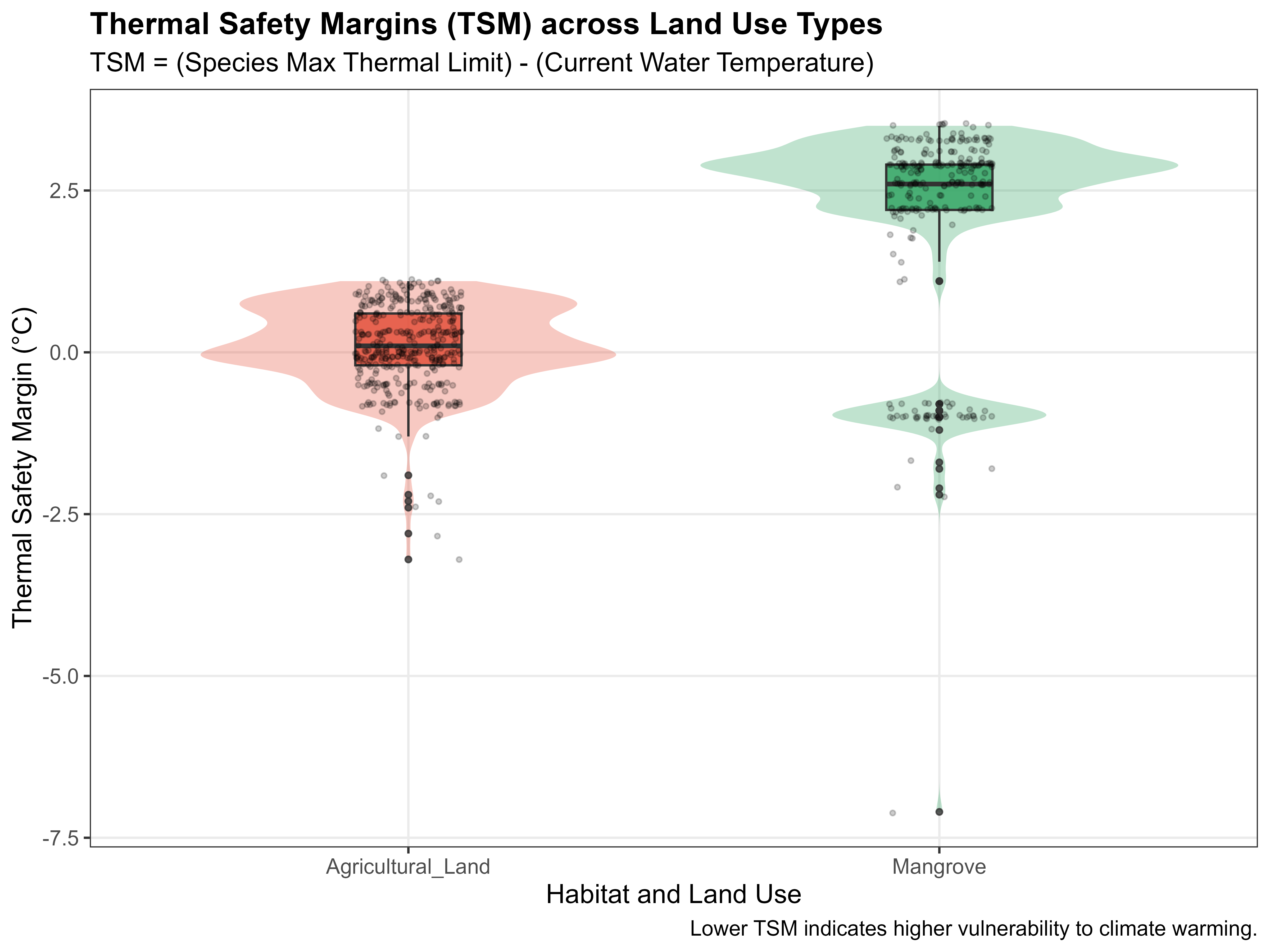
Figure 2: Thermal Safety Margins (TSM) across land-use types, showing lower TSM in agricultural lands compared to broader safety margins in intact mangroves.
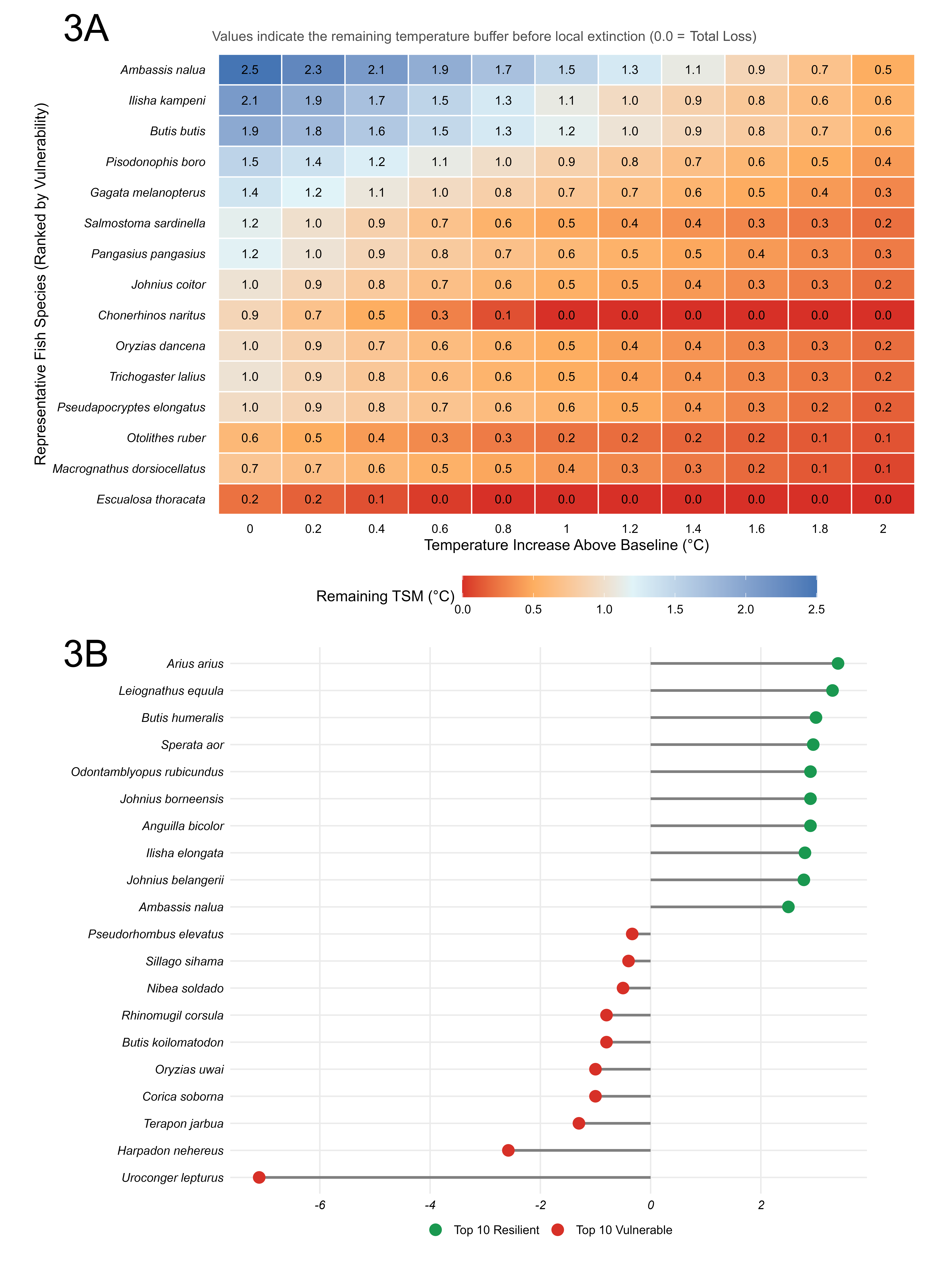
Figure 3: Species-specific thermal vulnerability showing (A) continuous TSM depletion across a +2.0 °C warming gradient and (B) top 10 most resilient versus top 10 most vulnerable fish species.
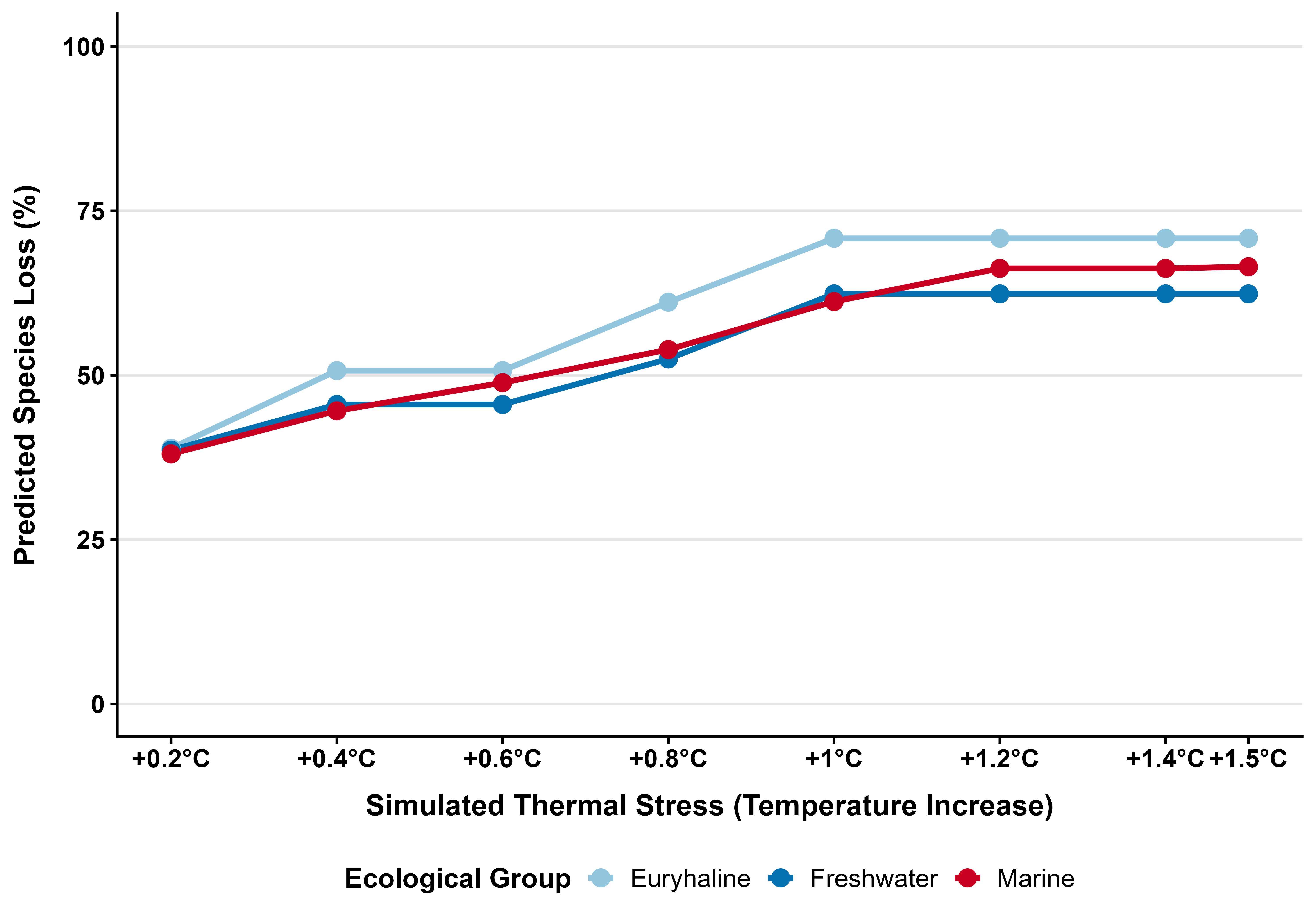
Figure 4: Survival curves of fish habitat guilds (freshwater, brackish, marine) under progressive salinity intrusion and thermal stress.
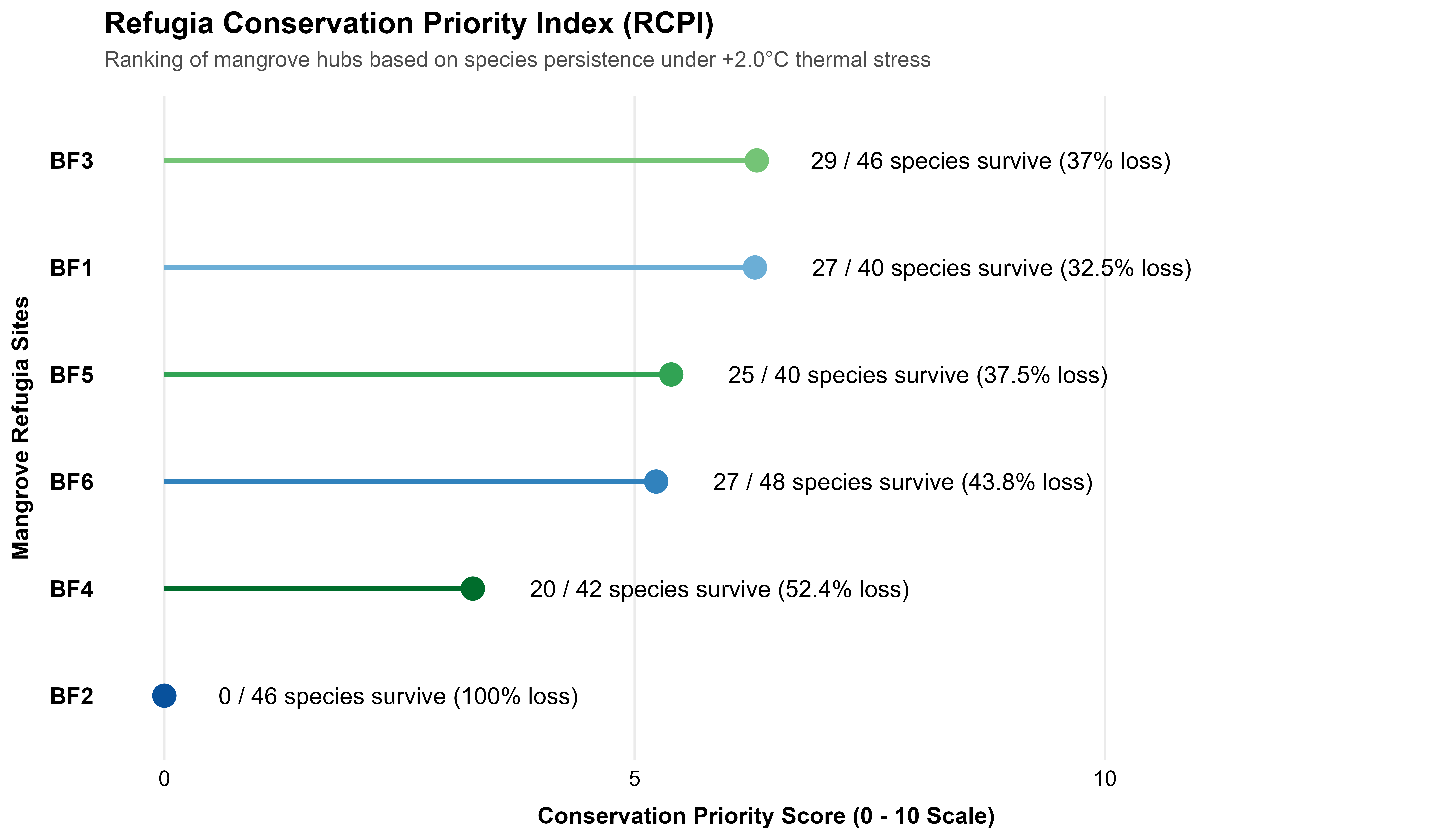
Figure 5: Refugia Conservation Priority Index (RCPI) ranking for mangrove sites under severe +2.0 °C thermal stress.
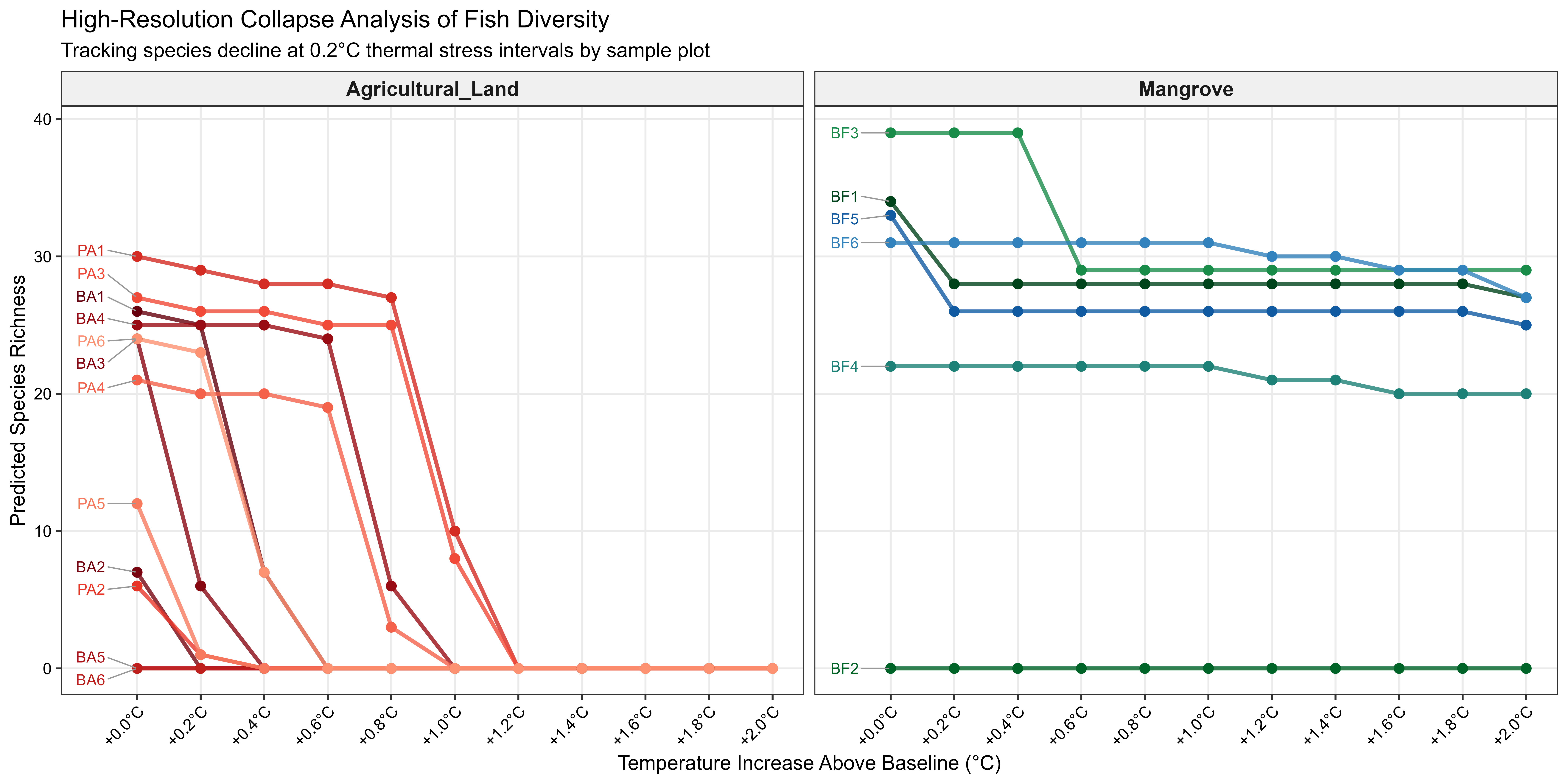
Figure 6: High-resolution collapse analysis tracking predicted species richness decline at 0.2 °C thermal stress intervals across sampling plots.
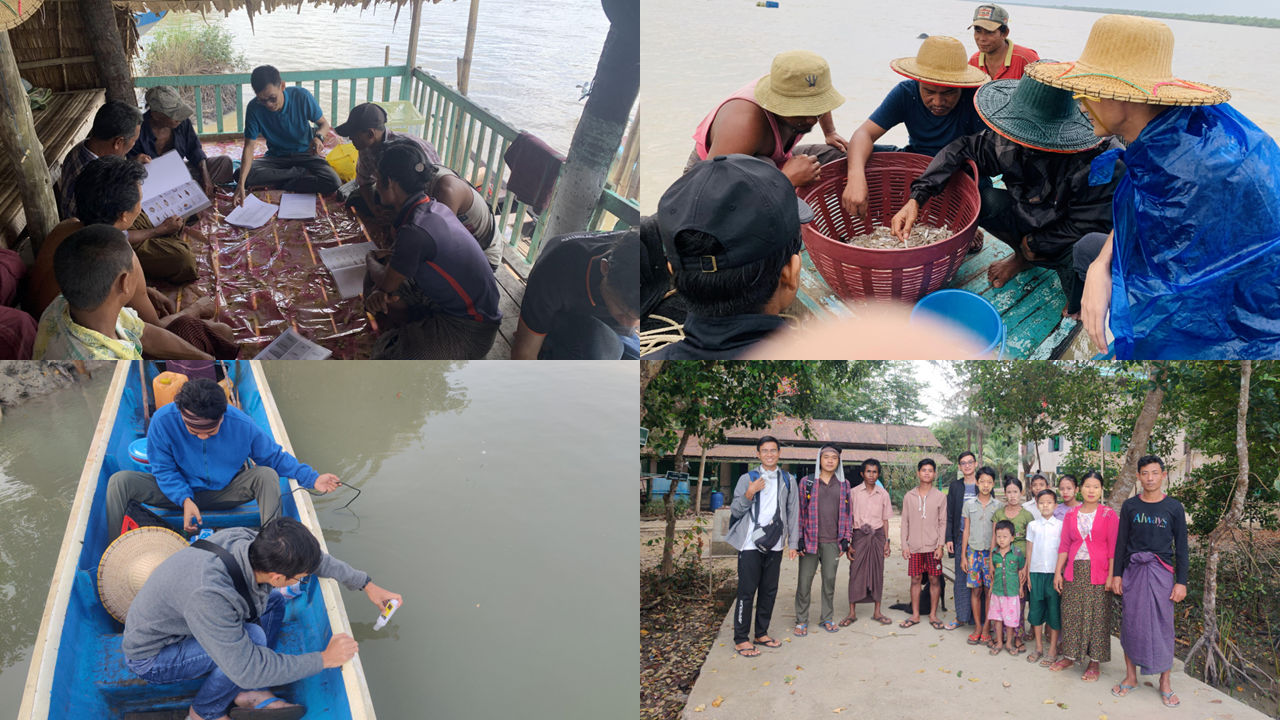
Figure 7 (Field Record) : Joint research team from KIZ, SEABRI, and the Forest Department of Myanmar conducting estuarine fish sampling and recording in situ water quality parameters (water temperature and salinity) in Bogale and Pyapon Townships, Irrawaddy Delta.
Contact:
Ko Ko Tun Thwin (Thwin Ko Ko Tun), Xiao Yong Chen
Kunming Institute of Zoology, Chinese Academy of Sciences,
Kunming, Yunnan 650201, China
E-mail: thwin@mail.kiz.ac.cn (TKKT), chenxy@mail.kiz.ac.cn (XYC)